







The NHL’s salary landscape is changing quickly. With the 2026-27 salary-cap ceiling set at $104 million and several new contracts pushing elite-player salaries dramatically higher, deals signed only a few years ago can suddenly look as if they belong to a different financial era.
That shift is especially noticeable among stars who have continued improving while their cap hits stayed fixed. Some are scoring at point-per-game rates, others are playing first-pairing minutes, and a few already have far more expensive extensions waiting to begin. These 18 NHL players enter 2026-27 with contracts that stand out because of their production, role, remaining term or the rapidly rising price of comparable talent.
Quinn Hughes — $7.85 Million Looks Smaller Every Year

Quinn Hughes enters the final season of his six-year contract carrying a $7.85 million cap hit, a figure that has aged remarkably well as elite defencemen become more expensive. Minnesota acquired Hughes from Vancouver during the 2025-26 season, and he immediately became one of the Wild’s most heavily used players. In 48 regular-season games with Minnesota, Hughes produced 53 points, including 48 assists, while averaging an enormous 27:54 of ice time per game. That was the highest average in the NHL over that portion of the season.
The context makes the contract look even better. Hughes is a former Norris Trophy winner capable of functioning as the engine of an offence while handling true No. 1-defenceman minutes. Minnesota is receiving that impact for less than $8 million against a $104 million ceiling. The deal expires after 2026-27, so the bargain has an obvious expiration date, but for one more season the Wild have one of hockey’s premier puck-moving defencemen at a cap charge that now looks unusually modest.
Cale Makar — One More Year at $9 Million Is Almost Absurd

Colorado’s old Cale Makar contract looks dramatically different after the Avalanche established what his next one will cost. Makar carries a $9 million cap hit for 2026-27, the final season of the six-year deal he signed in 2021. He delivered another elite season in 2025-26, collecting 20 goals and 79 points in 75 games and finishing second in Norris Trophy voting. That combination of scoring, skating and heavy responsibility would already make $9 million attractive in the current market.
Then came the comparison that changed everything. Colorado signed Makar to an eight-year extension worth $20.4 million per season beginning in 2027-28, the largest annual cap hit in NHL history when announced. That means his existing cap charge is less than half the amount the Avalanche have committed to him one year later. Colorado essentially gets another season of a two-time Norris winner at yesterday’s price before paying tomorrow’s price. Few contracts demonstrate the NHL’s changing salary economics more clearly.
Jack Hughes — Superstar Offence for an $8 Million Cap Hit

Jack Hughes’ eight-year, $64 million contract seemed aggressive when New Jersey committed to it before he had fully established himself as a superstar. The gamble looks very different now. Hughes remains locked in at an $8 million cap hit through 2029-30, giving the Devils several more seasons of cost certainty during what should be prime years of his career. He produced 77 points in only 61 games during 2025-26, a rate of 1.26 points per game.
Availability has occasionally interrupted Hughes’ seasons, so the contract is not completely without risk. But the financial upside is becoming increasingly obvious whenever he is on the ice. New contracts for high-end forwards are moving well beyond the $10 million threshold, yet New Jersey’s top offensive centre remains fixed at $8 million. That leaves the Devils more flexibility to surround him with other expensive talent. An agreement once based largely on projected development now looks like a textbook example of a team being rewarded for signing a young star before his statistical peak.
Nick Suzuki — A 100-Point Selke Winner at $7.875 Million

Nick Suzuki may have produced one of the clearest examples of a contract overtaking expectations. Montreal’s captain is signed through 2029-30 at a $7.875 million cap hit, and his 2025-26 season moved that number into another category entirely. Suzuki recorded 29 goals and 72 assists for 101 points in 82 games, finishing sixth in NHL scoring. He also won the Frank J. Selke Trophy as the league’s top defensive forward.
That combination is what makes the deal especially compelling. Montreal is not simply getting a productive first-line scorer for less than $8 million; it is getting a centre trusted against top opposition who has become one of the league’s most complete forwards. Suzuki also became the first Canadiens player in four decades to reach 100 points and just the fifth player in franchise history to do it. When the contract was signed, Montreal was paying for the expectation that its young captain would keep improving. After a 101-point, Selke-winning season, the Canadiens are now receiving considerably more than the original price implied.
Matt Boldy — A 42-Goal Season Changes the Conversation

Minnesota signed Matt Boldy to a seven-year contract carrying a $7 million annual cap hit before he had reached anything close to his offensive ceiling. That decision now appears increasingly important. Boldy erupted for 42 goals and 85 points in 76 games during 2025-26, giving the Wild a high-end scoring winger at a cap number that will remain unchanged through the 2029-30 season.
The timing is particularly favourable for Minnesota. Goal scorers entering unrestricted free agency increasingly command eight-figure salaries, while Boldy is still only in the middle of a long contract negotiated much earlier in his development. His value is not confined to simply finishing plays, either. He contributed 43 assists last season and was trusted on both special teams, including regular penalty-killing work. For a Wild club carrying other major financial commitments, having a prime-age 40-goal threat locked in at $7 million creates roster-building room that would be difficult to reproduce on the open market. The more Boldy scores, the better the original commitment looks.
Tim Stützle — Ottawa Bought Prime Years Before They Became Expensive

Tim Stützle’s eight-year agreement was built around projection, and the projection continues to work in Ottawa’s favour. The Senators centre carries an $8.35 million cap hit through the 2030-31 season. In 2025-26, he produced 34 goals, 49 assists and 83 points in 80 games, surpassing a point per game while remaining one of the central pieces of Ottawa’s offence.
The most attractive element is how much useful term remains. Stützle entered 2026-27 at only 24, meaning Ottawa is not paying a discounted number in exchange for absorbing a long decline phase. Instead, much of the agreement covers seasons in which he should remain in or near his physical prime. His $8.35 million cap hit was exactly 10 percent of the ceiling when the contract began in 2023-24; the same fixed salary now consumes a smaller portion of a much larger league cap. That is precisely how long-term contracts become bargains: the player improves, league economics move upward, and the original dollar figure never changes.
Tage Thompson — Forty Goals for Just Over $7 Million

Buffalo made one of its most important long-term bets when it signed Tage Thompson for seven years at a $7.143 million cap hit. Thompson has since turned himself into the type of goal-scoring centre who would be extremely difficult to replace at that price. He scored 40 goals and added 41 assists for 81 points in 81 games during 2025-26, leading the Sabres in both goals and points.
It was also Thompson’s third NHL season with at least 40 goals, placing him alongside a small group of major scorers in Sabres history to reach that mark three times. Yet Buffalo still has him under contract through 2029-30 at essentially the same annual cost as many secondary offensive players. At 6-foot-6, Thompson also offers a combination of size, shooting ability and positional versatility that is difficult to replicate. His contract was signed after a breakout but before there was certainty that the breakout represented a new normal. The repeated goal production has made that early commitment look increasingly valuable.
Brandon Hagel — Tampa Bay Locked Up More Than Just Scoring
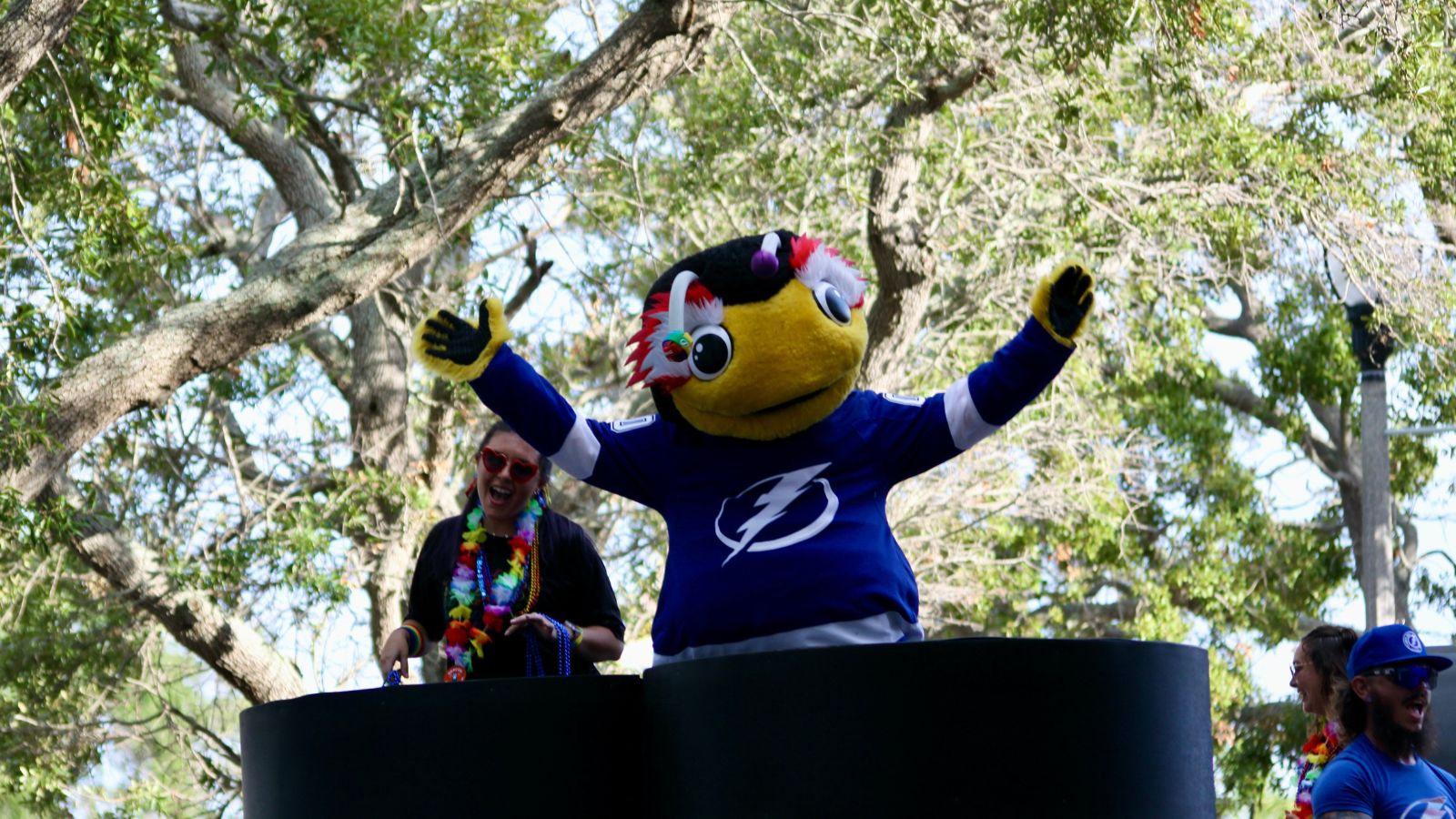
Brandon Hagel’s eight-year, $52 million contract is becoming one of the most useful deals on Tampa Bay’s payroll. His $6.5 million cap hit runs through 2031-32, yet his production has climbed into territory normally associated with much more expensive forwards. Hagel scored 36 goals and finished with 74 points in only 71 games during 2025-26, giving him better than a point-per-game pace.
What makes the contract unusual is that Hagel is not being protected as a one-dimensional scorer. He averaged more than two minutes per game on the penalty kill while also contributing heavily at even strength and on the power play. PuckPedia’s underlying numbers credited him with a 60 percent expected-goal share at five-on-five in 2025-26, illustrating how effectively Tampa Bay controlled play during his minutes. When the Lightning signed him, the eight-year term carried obvious commitment risk. As the cap rises and Hagel develops into a 30-plus-goal, all-situations forward, that same term increasingly looks like one of the contract’s biggest advantages.
Gustav Forsling — The Value Is Hidden in the Workload

Gustav Forsling does not need to produce enormous point totals for his contract to be valuable. Florida’s top-pairing defenceman carries a $5.75 million cap hit through 2031-32, giving the Panthers years of cost certainty for a player trusted against difficult competition. He played 80 games in 2025-26, recording 28 points while averaging more than 18 minutes of five-on-five ice time and nearly three minutes per game on the penalty kill.
Those responsibilities help explain why simply comparing Forsling’s scoring totals with offensive defencemen misses the point. Florida uses him to defend, transition the puck and absorb minutes that allow the rest of the blue line to settle into more favourable roles. His five-on-five expected-goal share remained above 50 percent in 2025-26 despite that workload. When Florida signed Forsling to an eight-year extension in 2024, $5.75 million represented a meaningful commitment. With the cap now at $104 million and first-pair defencemen becoming increasingly expensive, the contract is beginning to resemble structural savings rather than merely fair market value.
Josh Morrissey — Winnipeg Is Still Paying a Pre-Breakout Price

Josh Morrissey’s contract is one of the clearest examples of a player significantly outperforming expectations established when the agreement was signed. Winnipeg committed to an eight-year deal carrying a $6.25 million cap hit back in 2019, before Morrissey had developed into the offensive force he would later become. The same cap figure remains in place through 2027-28.
Morrissey delivered another strong season in 2025-26, scoring 14 goals and recording 55 points in 77 games. He also averaged nearly 20 minutes of five-on-five ice time per game and more than three minutes on the power play. That is legitimate No. 1-defenceman usage at a price now associated with considerably less prominent players. The Jets have already enjoyed several years of surplus value from the agreement, and the rising salary cap is making the final seasons look even better. A $6.25 million charge that once represented a sizeable portion of Winnipeg’s payroll now buys a veteran defenceman capable of driving offence while handling substantial minutes.
Dylan Guenther — Forty Goals Makes Eight Years Look Very Different

Utah took a calculated risk by giving Dylan Guenther an eight-year, $57.143 million contract before he had played anything close to a full NHL career. The annual cap hit of roughly $7.143 million was based heavily on what the organization believed he would become. One season into the agreement, the early results make that projection look remarkably promising.
Guenther scored 40 goals and added 33 assists for 73 points in 79 games during 2025-26. For a 23-year-old winger, reaching the 40-goal mark so early changes the economics of the deal. Utah has him signed through 2032-33, meaning the club potentially owns most of his prime scoring years at a fixed number negotiated before his first 40-goal season. That long runway separates Guenther’s agreement from many short-term bargains. If he continues producing anywhere near that level, Utah will not merely have a good contract for one or two seasons. It could have a major source of cap efficiency for the better part of a decade.
Clayton Keller — Point-Per-Game Production at $7.15 Million

Clayton Keller’s contract has survived several different stages of the Utah franchise and somehow become more attractive with age. His eight-year agreement carries a $7.15 million cap hit through 2027-28. Keller responded in 2025-26 with 26 goals, 62 assists and 88 points in 82 games, producing at a 1.07-point-per-game rate.
Keller’s deal was signed in 2019, when the NHL’s financial environment looked dramatically different. At the time, committing eight years and $57.2 million to a young winger involved meaningful projection. Years later, the cap hit is fixed while the league ceiling has climbed to $104 million. Utah is therefore paying a relatively modest share of its available cap for a captain and first-line offensive driver who just produced 88 points. The contract has only two seasons remaining, so the long-term advantage is winding down. But that may actually make the value more obvious: Keller is delivering his prime production while the team continues paying a figure established before he had fully reached it.
Robert Thomas — A Point-Per-Game Centre Locked In Through 2031

St. Louis secured Robert Thomas with an eight-year, $65 million deal that carries an $8.125 million annual cap charge. Four seasons into the agreement, the Blues are getting exactly the development they hoped for. Thomas recorded 25 goals and 39 assists for 64 points in 64 games during 2025-26, finishing at precisely a point-per-game pace while serving as the club’s first-line centre and captain.
His underlying performance also strengthened the value argument. PuckPedia credited Thomas with a 55 percent expected-goal share at five-on-five and a strong relative expected-goal figure, indicators that St. Louis generally tilted play in the right direction during his minutes. The contract runs through 2030-31, leaving several prime seasons at the same cap number. Centres with Thomas’ combination of playmaking, top-line responsibility and age profile are expensive to acquire once they reach unrestricted free agency. The Blues avoided that problem by committing early. As salaries around the league rise, $8.125 million increasingly looks less like star money and more like a discounted rate for a legitimate No. 1 centre.
Drake Batherson — His Next Contract Shows How Cheap This One Is

Few comparisons are cleaner than Drake Batherson’s current and future contracts. Ottawa will pay Batherson a $4.975 million cap hit in 2026-27, the final season of the six-year deal he signed in 2021. He is coming off career highs of 33 goals and 71 points in 79 games, making a sub-$5 million cap charge exceptionally useful for a first-line winger.
The Senators have already acknowledged how dramatically his market value has changed. In September 2026, Ottawa signed Batherson to an eight-year extension worth $10.75 million annually beginning in 2027-28. His next cap hit will therefore be more than twice his current one. That does not automatically make the new contract poor value; it simply illustrates how favourable the old agreement has become. For one final season, Ottawa gets a 30-goal, 70-point forward at less than $5 million while knowing exactly what comparable long-term retention now costs. In salary-cap terms, it is essentially a one-year window in which yesterday’s price and today’s market value exist side by side.
Sam Reinhart — Florida Kept an Elite Finisher Below $9 Million

Sam Reinhart’s eight-year, $69 million agreement raised understandable questions when Florida committed through his mid-30s. The early portion, however, continues to look extremely useful. Reinhart carries an $8.625 million cap hit through 2031-32 and produced 29 goals and 61 points in 64 games during the 2025-26 regular season.
There is also more to the contract than scoring totals. Reinhart has become an established part of Florida’s special teams and received Selke Trophy votes in 2025-26, reflecting recognition of his defensive contributions. A winger capable of threatening 30 or more goals, playing power-play minutes and contributing defensively at under $9 million becomes more valuable as comparable offensive contracts climb. The long term creates some age-related risk, especially toward the back end, but Florida structured the deal around a championship-calibre core rather than short-term flexibility. During Reinhart’s productive years, the Panthers are receiving a top-line player at an AAV that already sits below the growing price of many newly signed stars.
Wyatt Johnston — Forty-Five Goals on an $8.4 Million Deal
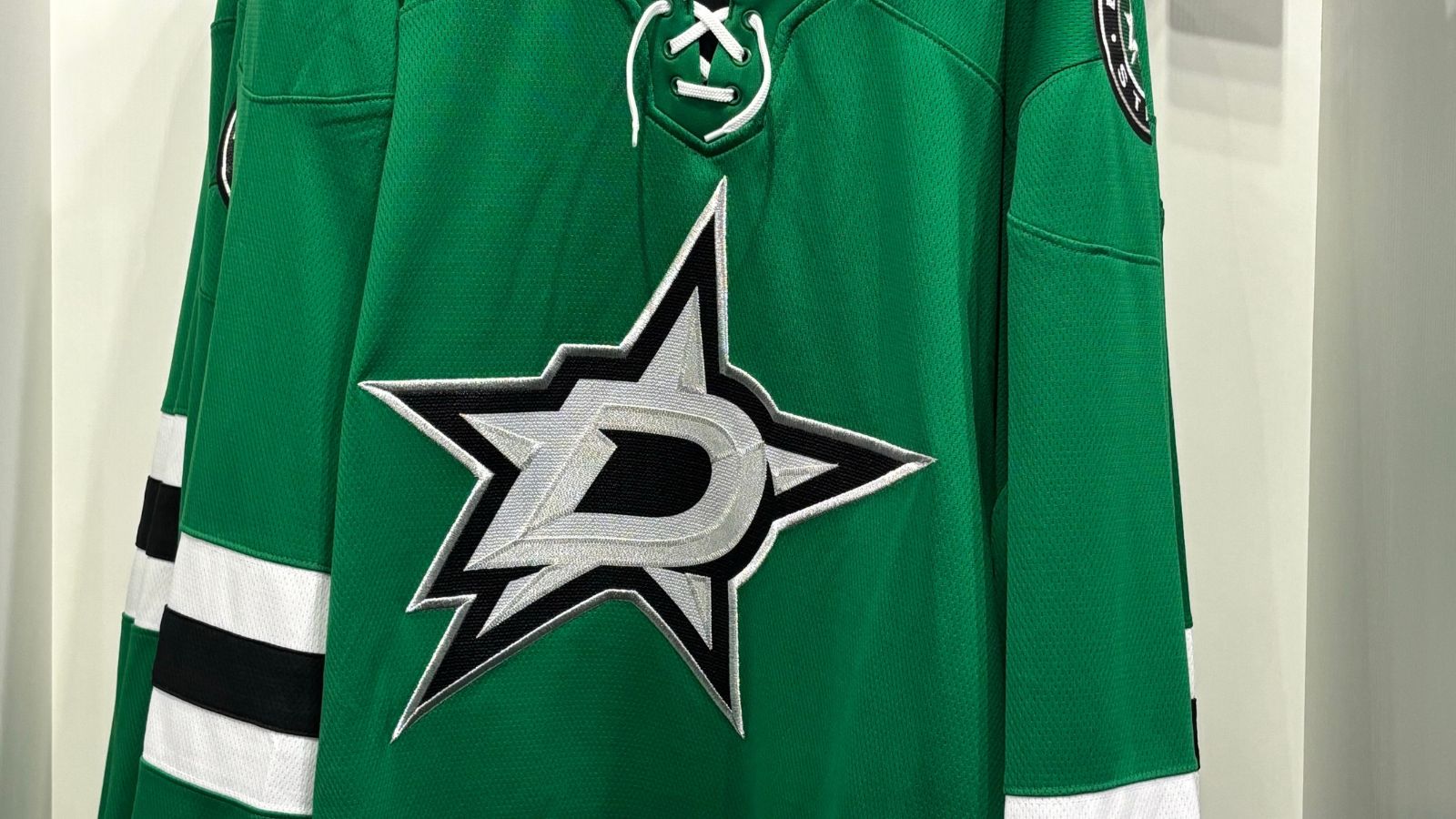
Dallas gave Wyatt Johnston a five-year, $42 million contract after his entry-level agreement, betting that his early NHL success was only the beginning. His first season under the new deal delivered a major return. Johnston scored 45 goals and recorded 86 points in 82 games during 2025-26, reaching a point-per-game level while still only 22 for most of the campaign.
The Stars now have Johnston at an $8.4 million cap hit through 2029-30. Forty-five-goal centres entering the open market can command dramatically more, especially in a league with a rapidly expanding cap ceiling. Dallas also retains several seasons of the contract before Johnston reaches unrestricted free agency, so the value is not limited to a short window. There will naturally be fluctuations in shooting percentage and production from season to season, but the larger point remains: Dallas priced the contract before Johnston had demonstrated this level of scoring. One 45-goal season later, the agreement already looks more team-friendly than it did on signing day.
Joel Eriksson Ek — First-Line Utility at a Middle-Six Price

Joel Eriksson Ek’s contract may be one of the least glamorous bargains in the league, which is partly why it works so well. Minnesota pays him $5.25 million annually through 2028-29. In 2025-26, he recorded 19 goals and 51 points in 70 games while continuing to handle power-play, penalty-killing and difficult matchup responsibilities.
The contract becomes especially valuable when viewed beside the Wild’s more expensive stars. Minnesota does not need Eriksson Ek to drive the highlight reel every night. It needs him to take important faceoffs, work around the net, contribute secondary offence and absorb defensive assignments that allow other forwards to operate in more favourable situations. He also received Selke Trophy votes for his 2025-26 performance. Paying barely more than $5 million for a centre capable of filling that many jobs gives a team important flexibility elsewhere on the roster. The agreement began when the league ceiling was $81.5 million; at $104 million in 2026-27, the exact same cap hit has become significantly easier to carry.
Miro Heiskanen — Heavy No. 1 Minutes Without a Double-Digit Cap Hit

Miro Heiskanen remains one of the Stars’ most important structural advantages. Dallas has its top defenceman signed for $8.45 million annually through 2028-29, a contract completed in 2021 when he was only 22. Heiskanen delivered 63 points in 77 games during 2025-26, including 54 assists, while continuing to play in every major situation for Dallas.
His deployment shows why the contract goes well beyond the box score. Heiskanen averaged 17:51 of five-on-five ice time, 3:15 on the power play and just over three minutes on the penalty kill per game. Very few defencemen are asked to contribute so extensively in all three phases. Yet Dallas still carries him at a cap hit comfortably below $10 million for three more seasons. As elite defenceman salaries push into the teens — and Makar’s future deal reaches $20.4 million — Heiskanen’s $8.45 million number looks increasingly detached from the current top end of the market. Dallas locked in a cornerstone early and is now benefiting from the league’s rapidly changing economics.