







The opening month of an NHL season has a way of turning summer assumptions into uncomfortable reality. New coaches discover which combinations actually work, prized prospects meet NHL defenders for the first time, contenders reveal unexpected weaknesses, and one hot or cold goaltender can completely change the mood around a franchise. The 2026–27 season brings even more intrigue because teams are moving to an 84-game schedule, several established stars have changed organizations, and a deep rookie class is arriving at the same time. From Carolina beginning its Stanley Cup defense to Gavin McKenna stepping into Toronto’s spotlight and major uncertainty surrounding stars in Winnipeg and Detroit, these 20 developments could define the first month of the NHL season.
Carolina’s Cup Defense Starts Under Immediate Pressure
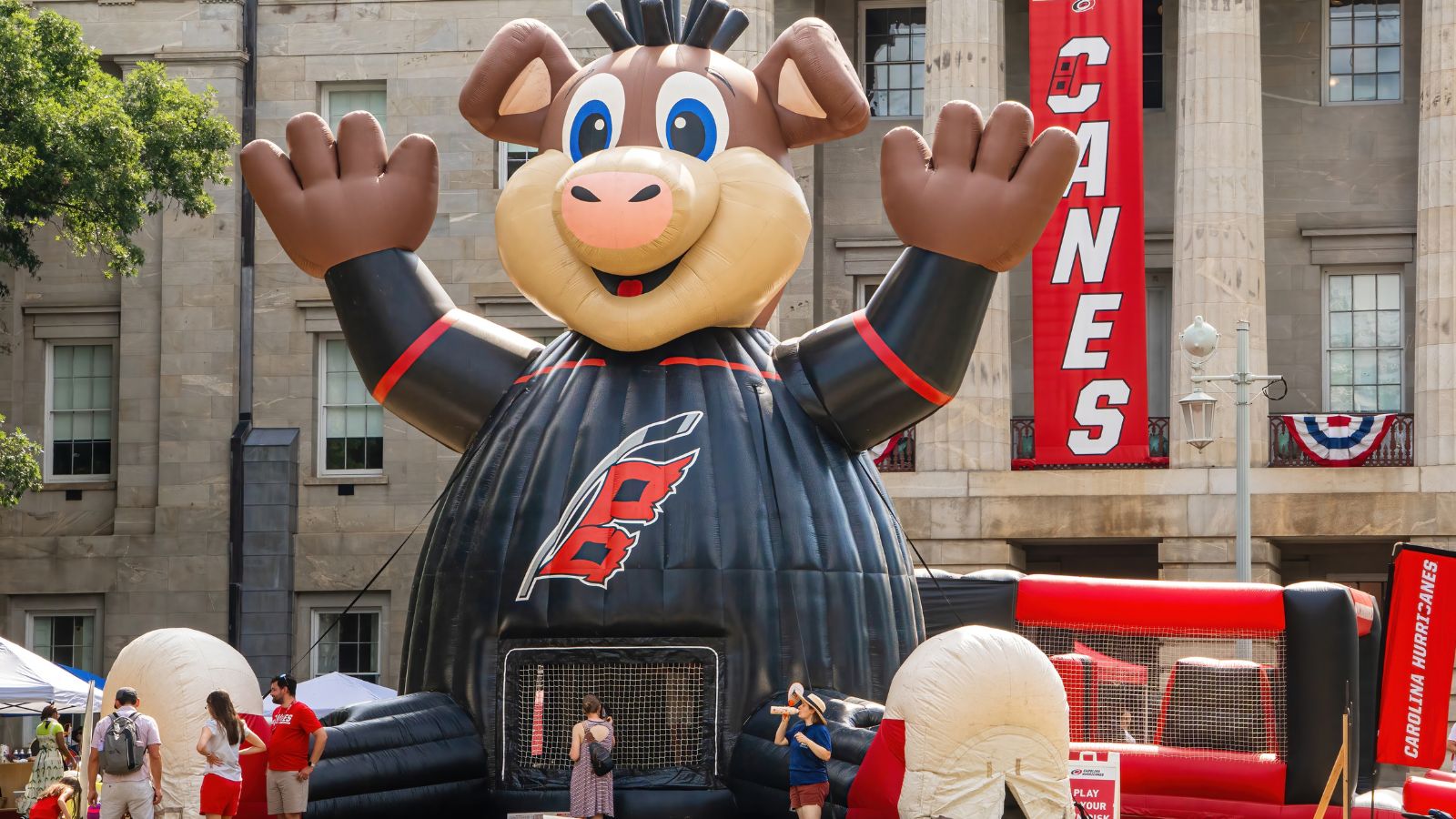
The Carolina Hurricanes will not get much time to enjoy being champions. After finishing 53-22-7 and winning the 2026 Stanley Cup, Carolina opens the new season on September 29 against Florida, with the championship banner going up before the game. That creates an immediate emotional test for a roster trying to avoid the familiar post-championship lull. Rod Brind’Amour’s club largely preserved the structure that carried it through the playoffs, which should make the transition easier than it is for champions that undergo major summer turnover.
There are still important differences. Goaltender Frederik Andersen left for Edmonton, leaving Brandon Bussi and Pyotr Kochetkov positioned to handle the crease. More significantly, Seth Jarvis is expected to miss the beginning of the season after shoulder surgery. Jarvis has become one of Carolina’s most important forwards, so October will reveal whether the Hurricanes possess enough depth to absorb his absence without disrupting their aggressive identity. Champions rarely receive easy nights, and Carolina will learn that immediately.
Florida’s Rebuilt Core Gets an Instant Test
Florida’s story has changed dramatically in a year. After winning consecutive Stanley Cups in 2024 and 2025, the Panthers slipped to 40-38-4 and missed the 2026 playoffs during an injury-heavy season. Their response was hardly subtle. Florida acquired Brady Tkachuk from Ottawa, pairing him with older brother Matthew, while also reshaping its goaltending after Sergei Bobrovsky departed for Toronto. Jacob Markstrom and Akira Schmid now carry the responsibility of replacing one of the defining players from Florida’s championship years.
That makes the first few weeks unusually revealing. The Panthers open against the champion Hurricanes, then have to determine how quickly Brady Tkachuk fits alongside a group already filled with strong personalities and established stars. Brad Marchand is also expected to miss the start while recovering from offseason surgery. Florida clearly believes last season was an injury-driven interruption rather than the end of its contention window. October should offer the first meaningful evidence supporting—or challenging—that belief.
Gavin McKenna’s First NHL Month in Toronto

Few rookies will enter the league with more attention than Gavin McKenna. Toronto selected the 18-year-old first overall in the 2026 NHL Draft after he recorded 51 points in 35 games during his freshman season at Penn State. NHL.com ranked him as the league’s top prospect entering 2026–27 and projected that his vision and playmaking could earn him a significant role alongside Toronto’s established offensive talent. For a franchise accustomed to enormous expectations, another headline attraction has arrived.
The circumstances make his debut especially fascinating. Toronto finished just 32-36-14 last season and missed the playoffs, then responded with major changes that included signing veteran goaltender Sergei Bobrovsky and hiring Jim Hiller as coach. McKenna therefore is not simply joining an established powerhouse where he can disappear into the lineup. The Maple Leafs need improvement, and quickly. His ice time, power-play role and chemistry with players such as Auston Matthews, William Nylander and John Tavares will become daily talking points almost immediately.
Montreal Has to Show Last Spring Wasn’t a One-Off

The Canadiens enter October dealing with a very different kind of pressure than they faced a year ago. Montreal went 48-24-10 last season and reached the Eastern Conference Final, transforming a young team with promising pieces into one expected to compete seriously again. Nick Suzuki, Cole Caufield and Juraj Slafkovsky give the Canadiens an established top line, but the opening month will reveal whether the supporting cast is deep enough to prevent opponents from concentrating too much attention on that trio.
Second-line centre remains one of the most important questions. Oliver Kapanen scored 22 goals as a rookie, yet only four came over his final 25 regular-season games, and he appeared in seven of Montreal’s 19 playoff contests. Goaltending is another storyline, with Jakub Dobes positioned to take on greater responsibility. Montreal begins the season in Toronto and later gets Carolina in its home opener. Those early tests should quickly reveal whether last spring accelerated the rebuild or simply created expectations faster than the roster could mature.
Edmonton’s New Coach and Goaltending Puzzle

Edmonton enters the season with enough change to make even familiar names feel different. The Oilers went 41-30-11 last season and finished second in the Pacific Division, but their postseason ended in the first round. Mike Babcock now takes over behind the bench, giving Connor McDavid and Edmonton’s veteran core another coaching system to absorb while expectations remain centred on competing for the Stanley Cup rather than merely reaching the postseason.
The crease could become the bigger October story. Edmonton planned to enter the season with Tristan Jarry, Frederik Andersen and Devon Levi as its goaltending options, but Andersen suffered an undisclosed injury during offseason training. He had just helped Carolina win the Stanley Cup, although a knee injury also kept him out of the final three games of the championship series. That leaves Jarry and Levi carrying more immediate responsibility. Edmonton’s offensive talent can hide plenty of problems during the regular season, but an unsettled goaltending rotation can become impossible to ignore if early save percentages begin slipping.
Vegas Begins Life Under a New Coach

The Golden Knights were only two victories away from another championship last June. Vegas finished 39-26-17, won the Pacific Division and advanced to the Stanley Cup Final before Carolina ended the series in six games. Instead of simply running everything back, the organization changed coaches, turning the team over to Ryan Craig. That is a notable transition for a franchise that has developed a reputation for making aggressive decisions even when it is already successful.
The roster also experienced movement. Victor Olofsson returned to Vegas in free agency, while Pavel Dorofeyev was among the departures the Golden Knights must replace. The larger question is whether Craig can preserve the structure and urgency that helped Vegas become one of the NHL’s most consistently successful expansion-era franchises. Since entering the league in 2017–18, the Golden Knights have reached the playoffs eight times in nine seasons and appeared in three Stanley Cup Finals. October will provide the first indication of whether another coaching change extends that remarkable standard or interrupts it.
Patrick Kane Returns While Connor Bedard Waits

Patrick Kane returning to Chicago should have been the uncomplicated feel-good story of the opening month. The 37-year-old signed a two-year, $16-million contract to return to the organization with which he won three Stanley Cups. Kane produced 57 points in 67 games with Detroit last season and enters the year with 1,400 career regular-season points, giving a young Blackhawks roster an accomplished offensive mentor who remains capable of contributing himself.
The problem is that Connor Bedard is not expected to begin the season beside him. Bedard underwent surgery on his left shoulder after being injured during a July practice and is expected to remain out until November. He has led Chicago in scoring in each of his first three NHL seasons. That absence means Kane’s responsibilities could become much larger than anticipated during October. Chicago finished 29-39-14 last season, so watching how it generates offense without Bedard will say plenty about whether the surrounding roster has genuinely progressed or still depends too heavily on its young star.
Ovechkin’s 22nd Season Comes With a Rebuilt Supporting Cast
Alex Ovechkin enters his 22nd NHL season in unusual territory: the goals record is already his, but Washington is trying to turn the final stage of his career into another championship opportunity. Ovechkin began training camp at age 41 with an NHL-record 929 goals. Rather than treating the season as a ceremonial victory lap, the Capitals added veteran talent around him, including Alex Tuch, Jordan Kyrou and Boone Jenner, after missing the playoffs with a 43-30-9 record.
Tuch alone provides a meaningful offensive addition. He produced 66 points, including 33 goals, for Buffalo last season before joining Washington. Ovechkin’s early usage will therefore be worth watching closely. The Capitals can potentially spread scoring responsibility more effectively instead of forcing their oldest star to carry so much of the offensive burden. His October production will naturally attract attention, but an even more important indicator may be whether Washington’s remodeled forward group can establish enough depth to make another serious postseason push realistic.
Crosby, Malkin and Letang Get Another Run Together

The Pittsburgh Penguins’ familiar core keeps finding another season. Sidney Crosby is beginning a franchise-record 22nd NHL campaign, while Evgeni Malkin and Kris Letang return alongside him for a 21st season as a trio. That kind of continuity is virtually unheard of in modern professional sports. Pittsburgh also showed last season that the group is not simply surviving on reputation, finishing 41-25-16 before losing in the first round of the playoffs.
Malkin’s situation adds intrigue. The 40-year-old signed a one-year, $5.5-million contract after producing 61 points in only 56 games last season, and he has not completely ruled out continuing beyond 2026–27. Pittsburgh also added players including Andrei Kuzmenko and Nicholas Robertson to refresh the supporting offense. October therefore becomes an early test of how much remains in this championship core. Crosby, Malkin and Letang no longer have unlimited seasons ahead of them, making every promising start—and every extended losing stretch—feel more significant than it once did.
Matthew Schaefer’s Sophomore Season
Matthew Schaefer made his rookie season look unusually easy for an 18-year-old NHL defenseman. The Islanders star became the unanimous Calder Trophy winner and established himself as one of the league’s most dynamic young skaters. NHL tracking data recorded 269 bursts at 20 mph or faster, the most among defensemen last season and 46 more than Cale Makar, who ranked second at the position. That combination of skating and offensive instinct immediately changed what New York could expect from its blue line.
Year two brings a different challenge. Opponents now have a full season of video on Schaefer, while the Islanders need his development to translate into team improvement. New York missed the playoffs despite remaining in the Metropolitan Division race into April, and its power play finished 30th at 16.5 percent. Assistant coach Rocky Thompson has been brought in to oversee that unit. If Schaefer can turn more of his skating and puck movement into special-teams production, the Islanders could look very different by Halloween.
San Jose’s Young Core Faces Bigger Expectations

San Jose’s rebuild took a major step forward last season. The Sharks improved by 19 victories and 34 standings points, finishing 39-35-8 and only four points outside a Western Conference playoff spot after owning the NHL’s worst record in each of the previous two seasons. Macklin Celebrini drove much of that leap, exploding for 115 points—45 goals and 70 assists—in his second NHL season.
Now the Sharks are adding another highly regarded prospect to that foundation. Ivar Stenberg, selected second overall in the 2026 draft, signed his entry-level contract in July and is expected to have an opportunity to play in the NHL. San Jose also strengthened its defense by adding veterans including Jacob Trouba. The first month will indicate whether last season’s progress was the beginning of a genuine competitive phase. Young teams sometimes improve dramatically before briefly stalling once expectations rise. Celebrini is no longer a surprise, opponents will prepare for him differently, and the Sharks must show they can handle that additional attention.
Porter Martone’s First Full NHL Season

Porter Martone barely needed an introduction to the NHL last spring. After completing his college season, the Flyers prospect joined Philadelphia for nine regular-season games and produced 10 points, including four goals. His impact continued into the postseason, where he became the first teenager in NHL history to score the game-winning goal in each of his first two playoff appearances. It was a remarkably small sample, but it ensured expectations would be much higher when he returned for his first full season.
The Flyers need the offense. Philadelphia reached the postseason for the first time in five years, yet its power play finished last in the NHL. Martone’s combination of size, finishing ability and confidence gives the club another potential solution, particularly with the man advantage. NHL.com ranked him second among prospects entering 2026–27, behind only Gavin McKenna. October will show whether Martone can sustain his immediate success once opponents prepare specifically for him and the nightly schedule becomes considerably less forgiving than a late-season introduction.
Jason Robertson and Dallas Need a Cleaner October
Dallas remains loaded with talent, but the Stars enter the season with something to prove after a surprisingly early exit. They finished 50-20-12 last year, only to lose in the first round after reaching the Western Conference Final in each of the previous three seasons. That makes their first month less about discovering whether the roster is good enough and more about establishing whether a familiar core can convert regular-season quality into another lengthy postseason run.
Jason Robertson remains central to that effort. He led Dallas with 96 points and 45 goals last season before signing a one-year, $12-million contract in July. That deal keeps him in place but also creates another season in which his production will be closely examined. The Stars still have high-end scoring and Jake Oettinger in goal, but October can reveal whether last spring produced meaningful adjustments or merely disappointment. A sharp start would quickly restore the sense that Dallas belongs among the West’s strongest contenders.
Colorado’s Elite Core Has to Turn Dominance Into Playoff Momentum
Colorado produced one of the NHL’s best regular seasons in 2025–26, finishing 55-16-11 and winning the Central Division. Nathan MacKinnon and Cale Makar again led a roster built to contend, while goaltenders Scott Wedgewood and Mackenzie Blackwood shared the William Jennings Trophy after the Avalanche allowed a league-low 197 goals. Wedgewood posted a 2.02 goals-against average and .921 save percentage, leading qualified NHL goaltenders in both categories.
Yet the season ended abruptly when Vegas swept Colorado in the Western Conference Final. The Avalanche responded by adjusting their supporting cast rather than dismantling the core, adding Jaden Schwartz along with younger forwards Fedor Svechkov and Zachary L’Heureux. That makes October worth watching for tactical reasons. Colorado already knows it can overwhelm teams over an 82-game-style regular-season grind. The more interesting question is whether the new depth gives coach Jared Bednar additional lineup combinations and matchup options that could eventually matter when another difficult playoff series arrives.
Buffalo Learns What Comes After the Breakthrough
For years, Buffalo’s first-month question was whether the Sabres could finally look like a playoff team. That question has changed. Buffalo went 50-23-9 last season, finished first in the Atlantic Division and ended an NHL-record 14-season playoff drought before advancing to the second round. Success, however, created a new challenge: proving that breakthrough can survive substantial roster turnover.
Defenseman Bowen Byram and forward Alex Tuch are both gone. Buffalo added young defensemen Olen Zellweger and Louis Crevier, but replacing Byram’s career-high 42 points and Tuch’s 66 points will require contributions from multiple players. One major advantage is goaltending. Buffalo’s goalies combined for a .907 save percentage last season, third-best in the NHL, and posted a league-leading .914 mark from December 9 onward. October will reveal whether that foundation remains intact. The Sabres are no longer chasing credibility; they are attempting to defend a division title while learning how quickly expectations can change after one successful season.
Quinn Hughes’ Contract Clock in Minnesota

Minnesota already knows what Quinn Hughes can do on the ice. The more complicated question concerns how long the superstar defenseman will remain part of the organization’s plans. Hughes enters 2026–27 in the final season of the six-year, $47.1-million contract he originally signed in Vancouver, carrying a $7.85-million average annual value. He has been eligible to sign an extension since July 1 and can become an unrestricted free agent next summer if no new agreement is reached.
That situation gives every early development greater significance. Minnesota went 46-24-12 and reached the second round last season, so this is not a club waiting patiently for a rebuild to mature. The Wild believe they can compete now, and retaining a player of Hughes’ calibre would shape the organization far beyond October. Contract negotiations do not necessarily affect performance, but unresolved star-player situations can dominate discussion around successful teams. Fans should watch both Hughes’ impact on Minnesota’s results and any movement toward a long-term agreement.
Detroit’s Dylan Larkin Situation Could Shape the Month

Few teams begin the season with more organizational uncertainty than Detroit. Dylan Larkin confirmed that he requested a trade after last season, and the Red Wings subsequently announced that they would begin 2026–27 without a captain after he held the role for six seasons. The situation became more complicated when Larkin suffered an upper-body injury during off-ice training shortly before camp, temporarily keeping him off the ice.
Detroit is also operating under interim general manager Shawn Horcoff after Steve Yzerman moved into a senior adviser role. Larkin, meanwhile, remains one of the franchise’s most important players, with 643 points in 808 career games entering camp. The Red Wings missed the playoffs for a 10th consecutive season last year, so the opening month already carried urgency before the trade request became public. Every Larkin appearance, lineup decision and management comment could now be examined for signs of what happens next. If Detroit struggles early, those questions will only become louder.
Ottawa Starts Its Post-Brady Tkachuk Era
Ottawa spent years building much of its public identity around Brady Tkachuk. That era ended in June when the Senators traded their captain to Florida, receiving the No. 9 and No. 25 picks in the 2026 draft, a conditional 2029 first-rounder and a 2027 second-round pick. Ottawa quickly turned part of that draft capital into immediate help, acquiring William Eklund from San Jose. Eklund had 53 points in 78 games last season and is expected to play a significant top-six role.
The Senators are not beginning from scratch. They went 44-27-11 last season and reached the playoffs, while Tim Stutzle and Jake Sanderson now become even more prominent faces of the franchise. Still, emotional storylines will arrive early. Tkachuk is scheduled to return to Ottawa with Florida on October 21. That game will inevitably attract attention, but the more important question is how the Senators establish their identity without the player who captained them from 2021–22 through last season.
The 84-Game Schedule Changes the Early Math
For the first time in 33 years, NHL teams will play an 84-game regular-season schedule. The league’s 1,344-game calendar begins September 29 and includes two additional divisional games for every club. The last NHL seasons featuring 84 games came in 1992–93 and 1993–94, when neutral-site games were part of the schedule. This time, the added contests increase divisional play, making those familiar matchups even more important to the standings.
October also includes one of the busiest showcases of the year. All 32 teams will play on October 13 during the NHL’s Frozen Frenzy, with start times staggered to create nearly continuous action. The larger schedule means one poor week represents a slightly smaller percentage of the full season, but the extra divisional games also put more four-point matchups on the calendar. Coaches may need to think differently about workload, particularly after a shortened preseason. Fans should watch whether teams begin managing goaltenders and veteran players differently under the expanded format.
Winnipeg’s Hellebuyck Drama Meets the Heritage Classic Spotlight

Winnipeg may have the most complicated opening month of any Canadian team. Connor Hellebuyck publicly confirmed in August that he had requested a trade, then failed to report when training camp opened. The Jets suspended the three-time Vezina Trophy winner for failing to report while general manager Kevin Cheveldayoff continued searching for a resolution. That creates enormous uncertainty for a club that fell to 35-35-12 and missed the playoffs last season only one year after winning the Presidents’ Trophy.
The spotlight becomes even brighter on October 25, when Winnipeg hosts Montreal outdoors in the Heritage Classic at Princess Auto Stadium. It will be the eighth Heritage Classic and the second staged at that Winnipeg venue; the 2016 game there drew 33,240 fans. By then, the Jets could either have begun stabilizing their season or still be dealing with one of hockey’s biggest unresolved personnel stories. An outdoor showcase is normally a celebration. This year, Winnipeg’s biggest October event may also become a revealing snapshot of where the franchise is headed.