





The NFL rarely waits until December to reveal its next wave of stars. Sometimes the signal is obvious—a young quarterback suddenly looks comfortable, a rookie earns starter-level work, or a defender begins turning pressure into game-changing plays. Other times, a breakout develops quietly as injuries, trades and changing depth charts create opportunities that did not exist in September.
The 2026 season is still young enough for those stories to change quickly. Some young players have already offered a glimpse of what could be coming, while others possess underlying numbers that look much better than their conventional statistics. These 18 NFL players have particularly interesting paths toward becoming much bigger names before the season is over.
Luther Burden III — WR, Chicago Bears

Luther Burden III entered his second season with a much clearer route to becoming one of Chicago’s primary offensive weapons. As a rookie in 2025, Burden caught 47 passes for 652 yards and two touchdowns despite starting only five regular-season games. That production was already encouraging, and his efficiency stood out even more. ESPN calculated that Burden averaged 2.92 yards per route run, placing him among the most productive rookie receivers on a per-route basis in recent years.
The opportunity is beginning to match the talent. DJ Moore’s departure created additional targets, and Burden opened 2026 with five receptions for 63 yards against Carolina. He can create yards after the catch, work from different alignments and turn relatively ordinary completions into explosive gains. A receiver does not need 12 targets every Sunday to break out if those touches consistently create chunk plays. Burden increasingly looks capable of moving from an intriguing young weapon into a central part of Chicago’s offense.
Jaxson Dart — QB, New York Giants
Jaxson Dart already provided plenty of excitement during his rookie season, throwing for 2,272 yards and 15 touchdowns while adding 487 rushing yards and nine scores on the ground. Those numbers made him an Offensive Rookie of the Year finalist, but there remains another level between being a promising young starter and becoming one of the quarterbacks around whom an entire franchise can confidently build.
His 2026 opener offered an impressive glimpse of that possibility. Dart completed 23 of 29 passes for 230 yards, three touchdowns and no interceptions while rushing for another 54 yards. His 134.2 passer rating only tells part of the story. The more encouraging development was efficiency: Dart completed more than 79% of his passes without sacrificing the running ability that made him dangerous as a rookie. If improved decision-making continues while his mobility remains a major part of the offense, his second season could become the year the Giants discover how high his ceiling actually is.
Cam Skattebo — RB, New York Giants
Cam Skattebo’s rookie season ended before he had the opportunity to fully establish himself, but he still accumulated 410 rushing yards and five rushing touchdowns, plus 207 receiving yards and two more scores. His physical running style translated almost immediately. During one extended stretch in 2025, NFL analysis credited him with 3.7 yards after contact per attempt while forcing missed tackles on 29.2% of his carries—numbers that explain why defenders rarely seemed to bring him down cleanly.
Skattebo began 2026 by looking much more like a featured back than a complementary option. He carried 18 times for 81 yards and a touchdown in the Giants’ opener, accounting for nearly half of New York’s 165 team rushing yards. That workload matters as much as the final box score. Running-back breakouts often happen when talent and volume finally arrive at the same time. If Skattebo continues receiving 15 to 20 touches while staying involved in the passing game, his bruising style could produce some very big afternoons.
Ashton Jeanty — RB, Las Vegas Raiders
Ashton Jeanty’s rookie statistics were impressive considering how difficult his working conditions often were. He rushed for 975 yards in 2025 and added 346 receiving yards, finishing with 10 total touchdowns. ESPN’s analysis found that Jeanty averaged only 1.26 yards before contact per rushing attempt, illustrating how frequently defenders were reaching him before he had room to accelerate. He nevertheless averaged 2.4 yards after contact, demonstrating how much production he created himself.
Las Vegas’ redesigned offense could make his second season look considerably different. Jeanty opened 2026 with 102 rushing yards on 23 carries and another 45 yards on six receptions, including two receiving touchdowns. That added up to 147 scrimmage yards on 29 touches. For a running back who spent much of his rookie year fighting through immediate contact, better blocking and more creative usage could be transformative. If Week 1’s involvement becomes normal rather than exceptional, Jeanty has the opportunity to jump from productive young starter to one of the NFL’s most complete backs.
Josh Downs — WR, Indianapolis Colts
Josh Downs is hardly an unknown player, but his first three seasons suggest there may still be considerably more production available. He caught 68 passes for 771 yards as a rookie, followed with 72 catches for 803 yards in 2024, then recorded 58 receptions for 566 yards in 2025. Much of his work has traditionally come from the slot, where ESPN found that 76% of his targets originated last season.
Indianapolis’ changing receiving corps could push Downs into a broader job description. Michael Pittman Jr.’s departure means more opportunities in two-receiver personnel, potentially moving Downs around the formation instead of treating him almost exclusively as a short-area slot target. He began 2026 modestly with two catches for 37 yards, but one went for 25 yards. Downs has consistently shown an ability to earn targets; NFL analysis calculated a 27.6% target rate across the previous two seasons. If his average target becomes deeper while the volume remains, a career-best season is very realistic.
Quinshon Judkins — RB, Cleveland Browns
Quinshon Judkins’ rookie season produced 827 rushing yards and seven touchdowns despite a Cleveland offense that frequently struggled to create clean rushing lanes. One statistic illustrates the challenge better than almost any traditional rushing total: NFL analysis calculated that 93.3% of Judkins’ rushing yardage came after contact, the highest percentage among qualifying backs with at least 100 carries in 2025.
That is both impressive and unsustainable as an offensive formula. Cleveland reshaped its offensive line entering 2026, creating the possibility that Judkins will occasionally reach linebackers before being forced to break his first tackle. His opener—12 carries for 33 yards and two catches for 17—did not produce an immediate explosion, but young backs can be heavily influenced by blocking continuity and game script. Judkins already proved he can manufacture yardage when plays become messy. If the Browns can give him even average space before contact, the same physical running that rescued broken plays as a rookie could begin producing far more explosive ones.
Carnell Tate — WR, Tennessee Titans
Carnell Tate entered the NFL carrying expectations that usually belong to immediate contributors. Tennessee selected the Ohio State receiver fourth overall in the 2026 draft after a college career in which he caught 121 passes and scored 14 receiving touchdowns. His combination of size, body control and contested-catch ability made him an appealing target for a Titans offense trying to build a young core around quarterback Cam Ward.
Tate did not explode statistically in his first NFL appearance, but four receptions for 38 yards in a starting role represented a useful beginning. Tennessee had already been giving him extensive work during organized team activities, when he reportedly caught 17 passes across seven practices open to reporters. Rookie receivers often need several weeks before route timing and defensive recognition catch up with their physical ability. Tate has something many first-year wideouts never receive: draft capital, a starting opportunity and an offense with reasons to keep feeding him. His target volume could rise substantially as the season progresses.
Gunnar Helm — TE, Tennessee Titans
Gunnar Helm quietly constructed a solid foundation during his rookie year. The Tennessee tight end caught 44 passes for 357 yards and two touchdowns in 16 games, starting 10 of them. Those totals did not command much national attention, but they showed that he could remain on the field, handle an NFL workload and provide a dependable target in the middle of the field.
Helm began 2026 with four catches for 28 yards and continued a reception streak that had reached every regular-season appearance of his young career at that point. ESPN identified him as a potential third option in Tennessee’s passing game, citing his physical tools and ability to track and adjust to throws. That role can become valuable quickly for a young quarterback. Tight ends often take longer than receivers to emerge because they must master blocking assignments as well as route concepts. Helm already has that developmental season behind him. A modest rise from three targets per game toward five or six could make his statistical profile look dramatically different by December.
Isaac TeSlaa — WR, Detroit Lions
Few players produced touchdowns at a stranger rate than Isaac TeSlaa did as a rookie. He caught only 16 passes for 239 yards in 2025, yet six of those receptions ended in the end zone. That means more than one-third of his catches were touchdowns. The 6-foot-4 receiver also averaged 14.9 yards per reception, suggesting Detroit did not view him merely as a possession option when he entered the pattern.
His second season has started slowly from a volume standpoint. TeSlaa went without a reception in Detroit’s opener before catching two passes for 26 yards against Buffalo in Week 2, including a 20-yard gain. That modest production is precisely why his potential remains interesting rather than established. Detroit already knows he can finish plays near the goal line and win on higher-value targets. The question is whether he can earn routine work between the 20s. If his weekly opportunities expand beyond occasional specialty routes, that unusual rookie touchdown production could become the foundation for a much broader role.
Anthony Hill Jr. — LB, Tennessee Titans
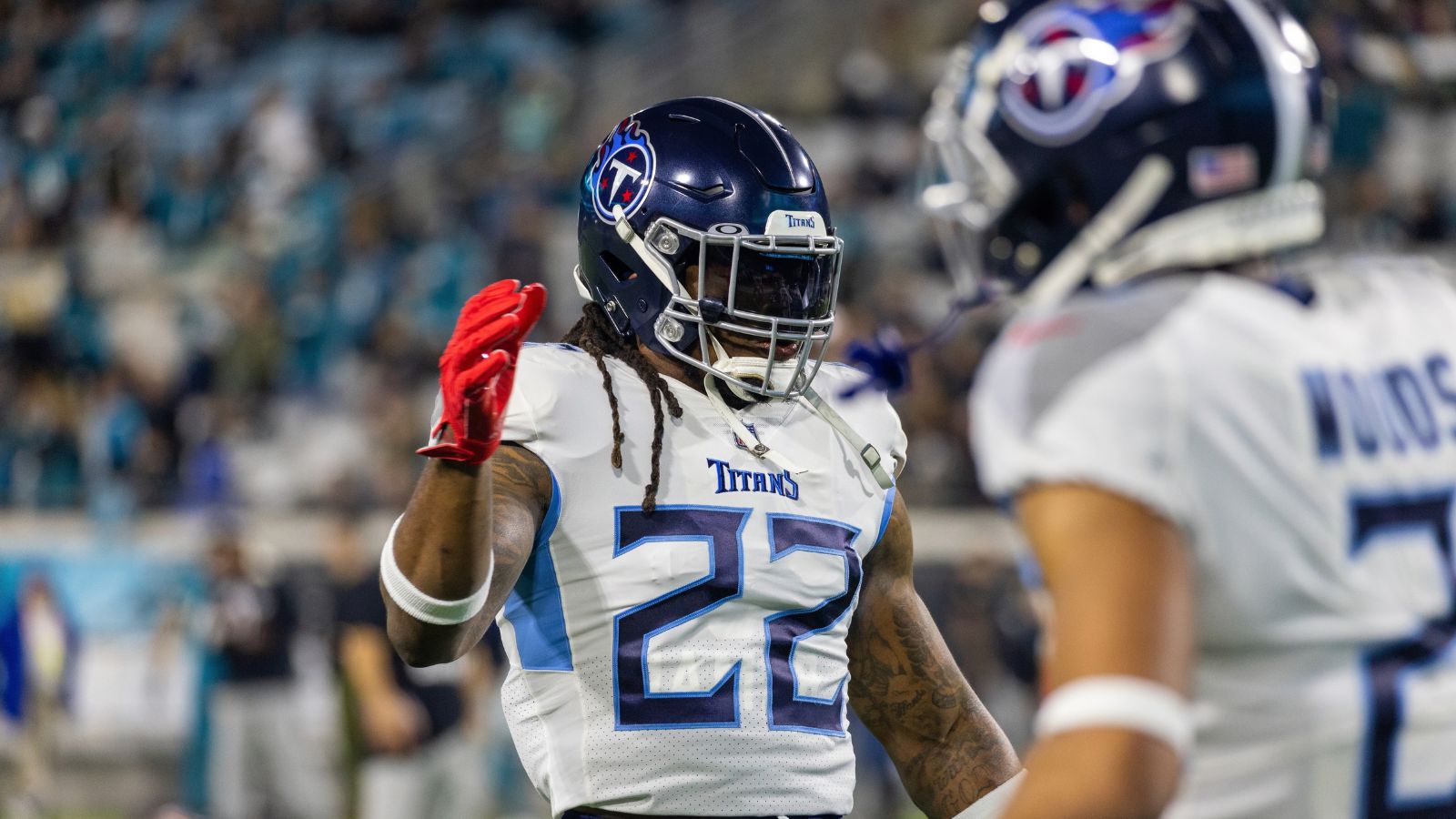
Anthony Hill Jr. did not need long to announce himself. The rookie linebacker opened his NFL career with 16 total tackles and two passes defensed, becoming the first rookie since at least 2000 to record that combination in a game. Eleven of those tackles and both pass breakups came in the first half, creating the kind of debut that makes coaches reconsider how quickly a young defender should be given additional responsibility.
Tennessee appears prepared to give it to him. Defensive coordinator Robert Saleh confirmed in September that Hill was starting at MIKE linebacker, putting him in the middle of the defense and giving him significant communication responsibilities. The production should not be completely surprising. At Texas, Hill recorded 113 tackles, eight sacks and 16.5 tackles for loss during the 2024 season before earning another second-team Associated Press All-America selection in 2025. Rookie linebackers inevitably make mistakes, but a player trusted to call a defense while possessing Hill’s range can accumulate impact plays remarkably quickly.
Walter Nolen III — DT, Arizona Cardinals
Walter Nolen III’s rookie season was frustratingly short, yet the small sample contained enough disruption to make his second year fascinating. Nolen appeared in only six games in 2025 because of injuries, but still recorded two sacks and 13 quarterback pressures. NFL analysis calculated a 14% pressure rate, third highest among defensive tackles who reached the relevant snap threshold.
Interior pressure is one of the NFL’s most difficult traits to find because quarterbacks have far less room to escape when disruption comes straight through the middle. Nolen demonstrated that ability before calf and knee problems repeatedly interrupted his first season. He returned healthy enough to start Arizona’s 2026 opener, though his box-score contribution was limited to an assisted tackle. His breakout case is therefore less about learning whether he can beat NFL blockers and more about availability. If Nolen can string together months rather than weeks of healthy football, the disruptive flashes from his six-game rookie sample could turn into one of Arizona’s biggest defensive developments.
Josaiah Stewart — OLB, Los Angeles Rams
Josaiah Stewart spent most of his rookie year working as a rotational pass rusher, appearing in all 17 games without making a start. He still produced three sacks, 22 combined tackles, two passes defensed and a forced fumble. Those are useful numbers for a player whose pass-rush opportunities were deliberately limited behind more established defenders.
The situation has changed quickly in 2026. Stewart recorded six combined tackles in the opener, and the Rams subsequently placed Myles Garrett on injured reserve because of a knee injury. That puts additional pressure on Los Angeles’ younger edge defenders, with Stewart positioned to receive more work opposite Byron Young. Rams defensive coordinator Chris Shula has specifically praised Stewart’s growth and the trust he has earned. Pass rushers often develop in bursts because one new move or slightly better timing can turn pressures into sacks. Stewart already demonstrated that he can contribute in a reserve role. Extended snaps could reveal whether he is ready to become a much more consequential piece of the defense.
Nohl Williams — CB, Kansas City Chiefs
Nohl Williams spent his rookie season learning behind a veteran Kansas City secondary, appearing in all 17 games while starting five. He finished with 48 combined tackles, seven passes defensed and a sack—enough production to suggest the Chiefs had more than a developmental corner waiting on the bench.
The offseason dramatically altered his path. Trent McDuffie and Jaylen Watson were no longer occupying the same roles, leaving Williams with a legitimate opportunity to establish himself as a starter. He responded in the 2026 opener with three tackles, one sack and a pass breakup. Cornerback breakouts can look different from those at offensive skill positions; fewer targets can actually be a compliment if quarterbacks decide testing a defender is not worth the risk. Williams’ challenge will be maintaining consistency when opponents deliberately attack him. If he converts the experience gained from five rookie-year starts into dependable outside coverage, Kansas City may discover that one of its largest offseason secondary questions already had an internal answer.
Jamaree Caldwell — DL, Los Angeles Chargers
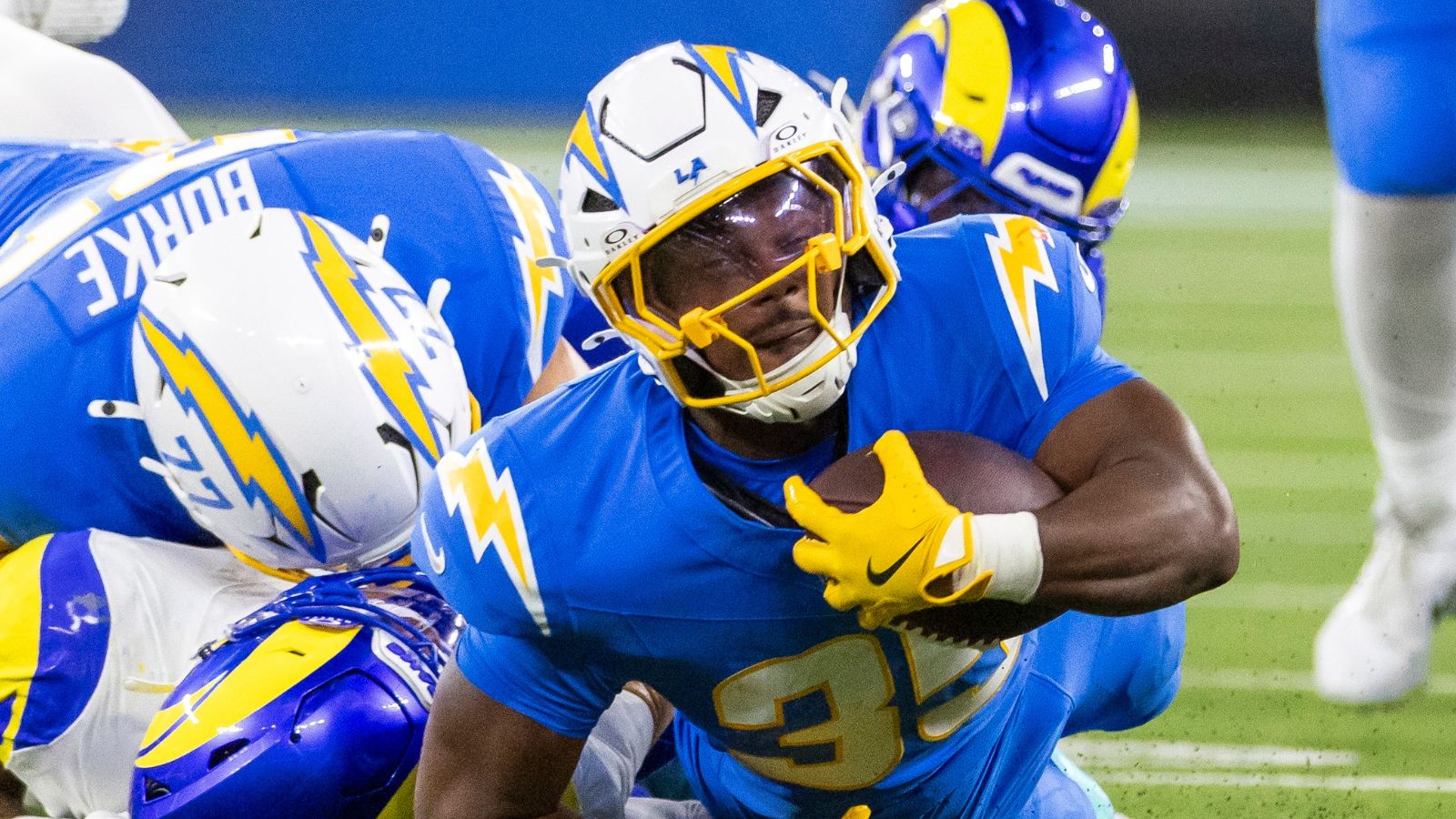
Jamaree Caldwell received more work as a rookie than his traditional statistics might suggest. He logged roughly 525 interior defensive snaps in 2025, almost matching veteran Teair Tart’s workload, while finishing with 31 combined tackles, a sack and a forced fumble. For a young defensive tackle, simply surviving that volume can be an important developmental milestone.
The Chargers appear ready to ask for more in Year 2. Caldwell opened 2026 with five tackles against Arizona, and team reporting has emphasized how significant his role became during his first season. Los Angeles also added veteran Dalvin Tomlinson to its defensive front, potentially allowing Caldwell to play in situations better suited to attacking quarterbacks rather than constantly absorbing blocks. Interior defenders often require patience because their contributions are not always reflected by sack totals. Caldwell already has the size and snap experience. If improved technique turns some of last year’s neutral snaps into pressures and tackles for loss, his second season could produce the statistical jump that makes his development much more visible.
Darius Alexander — DT, New York Giants
Darius Alexander’s rookie season became far more interesting near the finish. The Giants defensive tackle recorded 3.5 sacks overall, with three sacks and three tackles for loss arriving over his final six games. His pressure production also increased during that stretch, suggesting the improvement was not simply the result of a few fortunate plays.
That late-season momentum matters even more after the Giants’ defensive-line changes. Dexter Lawrence’s departure for Cincinnati created snaps and pass-rush responsibility in the middle, an area where Alexander had already begun earning more trust. By the final week of 2025, he was playing roughly 80% of New York’s defensive snaps. Young interior linemen frequently need a full season to adjust to NFL leverage, double teams and blocking combinations. Alexander appeared to be solving some of those problems as his rookie year ended. If that six-game surge was the beginning of a developmental curve rather than a temporary spike, New York may have a considerably more dangerous interior pass rusher than his modest rookie totals initially suggest.
Nolan Smith Jr. — OLB, Philadelphia Eagles
Nolan Smith Jr.’s sack totals do not completely describe how disruptive he was in 2025. He finished with three sacks in 12 games after posting 6.5 the year before, which on the surface looks like a step backward. Yet ESPN charting credited Smith with a 16.3% pressure rate and a 4.7% quick-pressure rate, evidence that he was reaching quarterbacks more often than the final sack column indicated.
Health played a role in suppressing his overall numbers, and Smith entered 2026 trying to turn pressure into finished plays more consistently. He recorded two tackles in the opener without a sack, leaving plenty of statistical room for a midseason surge. Pass-rush production can be volatile: a defender can repeatedly force hurried throws for weeks before several sacks suddenly arrive close together. Smith also provides value against the run, helping keep him on the field even when the sacks are not coming. If his strong pressure rate survives a larger healthy workload, his final 2026 numbers could look dramatically different from the early box scores.
T’Vondre Sweat — DT, New York Jets
T’Vondre Sweat is difficult to miss before the ball is even snapped. Listed around 6-foot-4 and 366 pounds by the Jets, the massive defensive tackle has the size to consume blocking combinations while possessing considerably more athleticism than his measurements might suggest. As a Tennessee rookie in 2024, he generated 23 quarterback pressures, an encouraging figure for a player primarily known for occupying space against the run.
New York acquired Sweat from the Titans before his third NFL season, creating a fresh opportunity in Aaron Glenn’s defense. He recorded 34 combined tackles and two sacks in 2025 before the trade, then began 2026 quietly with an assisted tackle against his former team. His potential breakout may never be defined by double-digit sacks. Instead, it could appear through collapsing pockets, creating clean lanes for teammates and forcing offenses to dedicate two blockers to the middle. If Sweat’s pass-rush production rises while his run defense remains dependable, the Jets could have much more than a traditional nose tackle.
Erick All Jr. — TE, Cincinnati Bengals
Erick All Jr. represents the longest-term breakout bet on this list because his NFL career has repeatedly been interrupted by injury. He caught 20 passes for 158 yards across nine games as a rookie in 2024 before suffering another ACL injury. Complications from the rehabilitation kept him out for the entire 2025 season, delaying what had initially looked like a promising development path.
The important development in 2026 is simply that All is back. Cincinnati kept him on its initial 53-man roster, and he was practicing with Joe Burrow before Week 1. During his healthy rookie stretch, All actually outsnapped veteran Mike Gesicki in five of nine games, reflecting how highly Cincinnati valued his combination of blocking and receiving ability. He has not immediately re-emerged as a receiving factor, and the Bengals have a crowded tight-end room. Still, the season is long. If his knee continues responding well and his snap share gradually climbs, All has enough all-around ability to become a meaningful late-season weapon rather than merely an encouraging comeback story.