







The first two weeks of an NFL season are noisy. One spectacular highlight can dominate the conversation while a more complete performance gets buried beneath a final score, a fantasy result or a bigger headline elsewhere. That makes early-season evaluation especially tricky in 2026, when Week 1 produced unusually high scoring and several familiar stars opened with efficient, multi-dimensional performances. These 20 players have already put together starts that deserve a closer look, whether through efficiency, workload, explosive plays or defensive impact. Because Sunday’s Sept. 20 games were still in progress during verification, this snapshot uses only completed games through Thursday, Sept. 17. Buffalo and Detroit players therefore have two completed games included, while most of the other players have one. The sample is small, but the production is real.
Jared Goff — The 1-1 Record Is Hiding Elite Early Efficiency
Detroit’s record does not immediately scream dominant quarterback play, yet Jared Goff has opened 2026 with one of the league’s cleanest passing lines. Through two completed games, he has thrown for 533 yards, six touchdowns and zero interceptions while completing 67.5% of his passes. His 113.2 passer rating stands out because the Lions have already played one overtime game and then chased points on the road in Buffalo.
The stronger signal came in that loss to the Bills. Goff completed 26 of 38 attempts for 327 yards and four touchdowns without an interception, finishing with a 130.0 passer rating. Buffalo won by 10, so the result naturally pulled attention away from Detroit’s quarterback. Still, six touchdown passes without a pick through two games is the kind of start that can be hidden by a 1-1 record. Goff is not simply managing the offense; he is producing at a highly efficient level.
Amon-Ra St. Brown — Four Touchdowns Have Arrived Almost Quietly
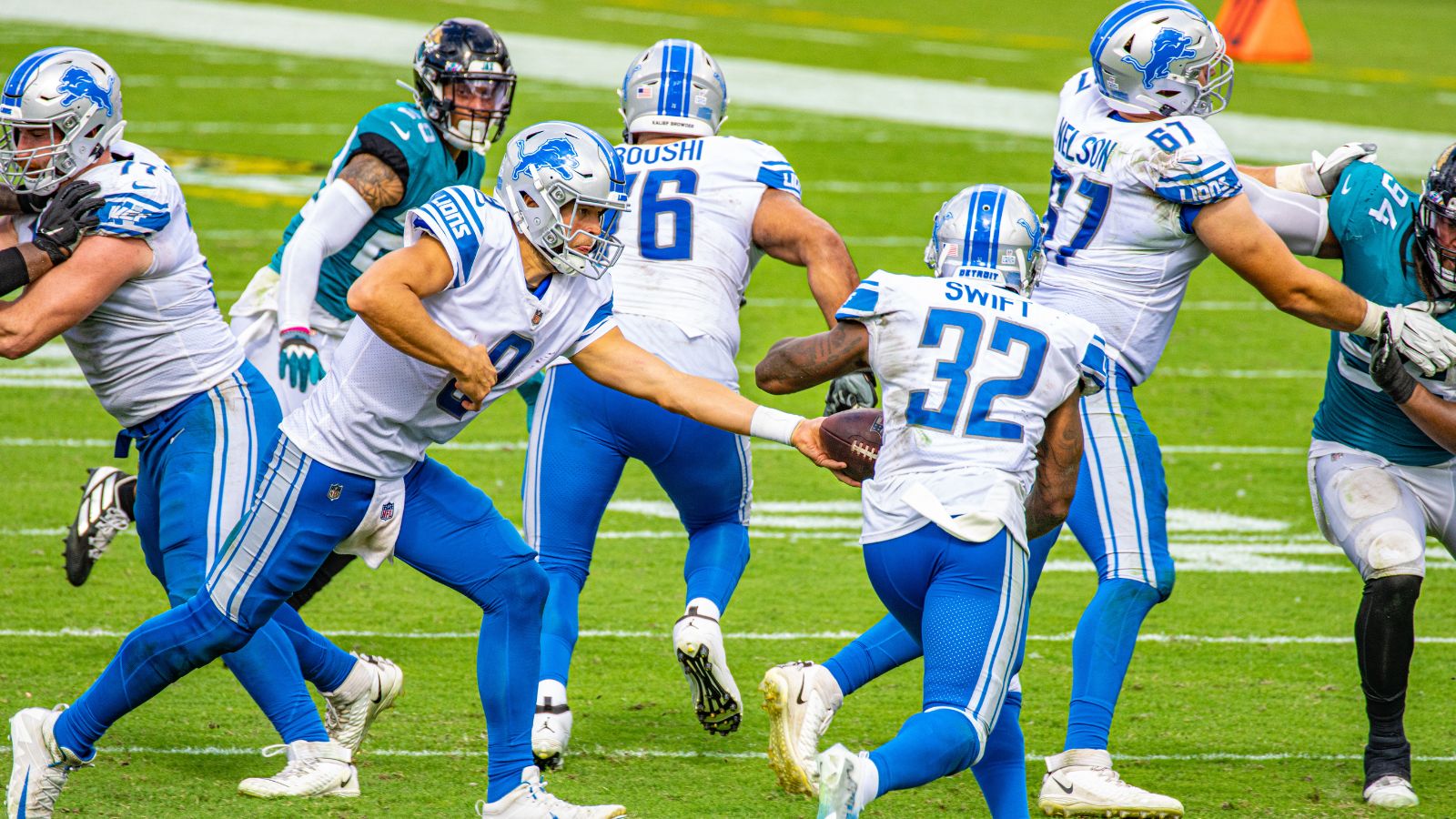
Amon-Ra St. Brown has spent several seasons becoming one of football’s most dependable high-volume receivers, but his early 2026 production has added a more explosive scoring layer. Through Detroit’s first two completed games, he has 19 catches for 209 yards and four touchdowns. He scored twice in each game, combining possession-receiver consistency with the touchdown output usually associated with more specialized red-zone threats.
His Week 2 performance in Buffalo showed how difficult he remains to contain. St. Brown caught nine passes for 142 yards and two scores, averaged 15.8 yards per reception and produced a 34-yard gain. Detroit lost 41-31, shifting most of the attention toward Buffalo, but St. Brown was one of the game’s most productive players. Four touchdowns in two games can look like a hot streak; paired with 19 receptions, 209 yards and 27 targets, it looks much more like a receiver controlling games in several different ways.
Dalton Kincaid — Buffalo’s Tight End Is Becoming a Chunk-Play Weapon
Dalton Kincaid’s start has been easy to miss because Josh Allen produces the loudest headlines in Buffalo, but the tight end’s numbers are difficult to dismiss. Kincaid has 12 receptions for 225 yards through two completed games, an extraordinary 18.8 yards per catch. He opened with five catches for 130 yards against Houston, then followed with seven catches for 95 yards and a touchdown against Detroit.
The efficiency is not appearing from nowhere. NFL Pro noted after the Detroit game that, among tight ends with at least 34 targets since the start of last season, Kincaid led in yards per route run, yards per target and explosive-play rate. Buffalo has several receiving options, but Kincaid is giving the offense something different: a middle-of-the-field target who can generate chunk yardage instead of merely absorbing short completions. That role can matter more than raw target totals, especially in an offense where Allen spreads opportunities around.
James Cook — The Rushing Champion Has Not Slowed Down
James Cook entered 2026 with higher expectations after rushing for 1,621 yards in 2025, yet his first two games suggest that last season’s leap was not a one-year spike. Cook has 192 rushing yards on 34 carries, an average of 5.6 yards per attempt, with one touchdown. His opener against Houston was solid, but the second game showed how Buffalo can punish defenses that devote too much attention to Josh Allen.
Against Detroit, Cook carried 21 times for 135 yards and a touchdown, averaging 6.4 yards per carry and breaking a 35-yard run. That performance gave Buffalo efficient early-down production without requiring every possession to become an Allen improvisation drill. Running backs can disappear from the national conversation when their quarterback is an MVP-level star, but Cook is beginning the season like a player capable of making Buffalo less dependent on superhero football. The volume, efficiency and recent track record are all pointing in the same direction.
Trevor Lawrence — One Game Looked Like the Version Jacksonville Has Waited For
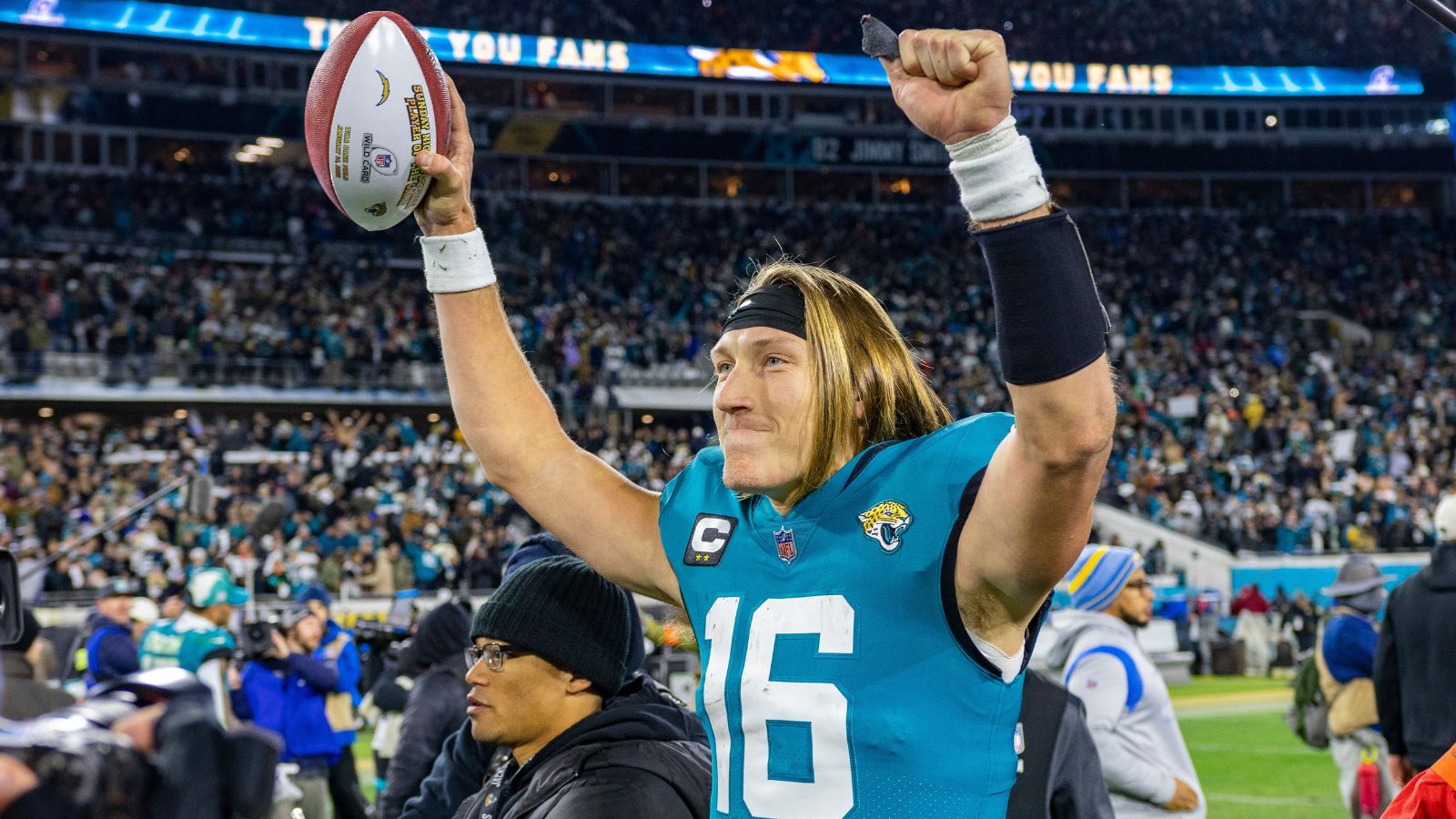
Trevor Lawrence’s opening performance was so efficient that it almost looked routine once Jacksonville built a comfortable lead. Against Cleveland, he completed 18 of 23 passes for 245 yards, four touchdowns and no interceptions. His 78.3% completion rate and 150.6 passer rating were elite single-game marks, and he averaged 10.6 yards per attempt. Jacksonville won 34-10 without needing massive passing volume.
That distinction matters because much of the conversation around Lawrence has focused on whether the former No. 1 pick can turn flashes into sustained top-tier production. In Week 1, he distributed four touchdown passes without giving Cleveland an interception and helped create separation early. One outing cannot settle a multi-year debate, but it can show what the offense looks like when quarterback efficiency, explosive gains and red-zone execution arrive together. Lawrence’s opener was not merely a strong fantasy line; it was a controlled, low-mistake performance that made the entire Jaguars offense look more stable.
Jahmyr Gibbs — His Expanded Workload Is Already Changing Detroit
Jahmyr Gibbs has always been explosive, but Detroit’s early 2026 usage suggests he is no longer being treated like a specialist whose touches need careful rationing. Through two games, Gibbs has 208 rushing yards and 91 receiving yards, giving him 299 yards from scrimmage. He also has three total touchdowns. In the opener, he handled a career-high 29 carries for 156 yards and two scores, then added five catches.
The historical context makes the start even more impressive. Week 1 was Gibbs’ 50th career game, and his two touchdowns pushed him to 51 for his career. NFL Research noted that he became only the fifth player in league history to score at least 50 touchdowns within his first 50 games. Even on a quieter rushing night in Buffalo, he caught six passes for 61 yards and a touchdown. When one part of his game is contained, another can still produce, which is exactly why his expanded role matters.
Derrick Henry — The Age Conversation Keeps Losing to the Tape

Derrick Henry opened 2026 in a way that made another offseason of age-related concern feel premature. Against Indianapolis, he rushed 24 times for 144 yards and three touchdowns, averaging exactly six yards per carry. He also added a 19-yard reception, finishing with 163 yards from scrimmage. Baltimore scored 41 points, and Henry’s ability to turn ordinary early-down runs into drive-changing gains was central to the offense.
The blocking context made the performance even more revealing. NFL analysis using Next Gen Stats credited Henry with 110 rushing yards before contact, the third-highest single-game total of his career, and noted he was contacted at the line on only 8.3% of his carries. That is partly a compliment to Baltimore’s offensive line, but it also highlights why Henry remains dangerous. Give a runner of his size clean acceleration and defenders are forced to tackle him after momentum has already built. The early formula still looks brutally effective.
Bijan Robinson — Atlanta’s Loss Hid a 173-Yard All-Purpose Day

Bijan Robinson’s Week 1 box score tells a better story than Atlanta’s 20-13 loss in Pittsburgh. Robinson carried 21 times for 83 yards and caught eight passes for 90 more, giving him 173 yards from scrimmage on 29 touches. He also scored a receiving touchdown. A four-yard rushing average may not jump off the page, but pairing that workload with 11.2 yards per reception shows how difficult Pittsburgh found it to remove him from the offense.
That receiving production matters because it prevents defenses from treating Robinson like a conventional feature back. He recorded two receptions of at least 20 yards and remained Atlanta’s most reliable source of yardage. His 2025 season already showed the ceiling of that role: 1,478 rushing yards and 820 receiving yards. The opener suggests those responsibilities remain intact. If anything, eight catches point toward another season in which Robinson’s value is better measured by total offensive involvement than by rushing totals alone.
Chris Olave — The Saints May Have a True Downfield Volume Receiver Again
Chris Olave’s season began with a rare combination of volume and explosiveness. He caught 10 passes for 182 yards against Detroit, averaging 18.2 yards per reception. Four catches gained at least 20 yards, two went for 40 or more, and seven produced first downs. New Orleans lost 31-30 in overtime, allowing the finish and Detroit’s escape to overshadow what Olave did to the Lions’ secondary.
The encouraging part is that the performance did not require a touchdown to look dominant. Olave repeatedly moved the offense with chunk gains and turned 10 receptions into nearly 200 yards. He entered 2026 after a 100-catch, 1,163-yard, nine-touchdown season in 2025, so this was not a random breakout by an unknown player. Instead, it looked like an established receiver expanding the ceiling of his role. For a Saints offense trying to build consistency, Olave’s ability to combine high target volume with true downfield production may be one of the most important developments of the opening week.
Jaxon Smith-Njigba — Seattle’s Low-Scoring Opener Masked a Big Receiving Day
Seattle’s 13-10 win over New England looked like a defensive grinder, which made it easy to miss how productive Jaxon Smith-Njigba was. He caught eight passes for 122 yards and a touchdown, averaging 15.2 yards per reception. His longest catch went for 45 yards, giving Seattle the explosive play it needed in a game where every possession carried extra weight.
That combination matters because true No. 1 receivers must produce even when an offense is not operating in a shootout. Smith-Njigba’s eight catches show that his yardage was not built on one fluky bomb; he remained involved throughout the game and then added the 45-yard touchdown on top. Seattle opened its title defense with only 13 points, yet its top receiver still created meaningful volume and a decisive scoring play. The ability to manufacture receiving production without a high-scoring script may prove more important over a full season than a single gaudy box score in a wide-open game.
Justin Jefferson — He Matched Last Season’s Touchdown Total in One Game
Justin Jefferson’s 2025 season was unusual by his extraordinary standards. He still topped 1,000 receiving yards, but he finished with only two touchdown catches. One game into 2026, he had already matched that total. Jefferson caught eight passes for 92 yards and two touchdowns in Minnesota’s 39-22 win over Green Bay, immediately restoring scoring impact to his statistical profile.
The yardage total was not outrageous for a player with multiple 1,400-yard seasons, which is why the opener can be underrated. Five of Jefferson’s eight catches moved the chains, and his longest gain went for 39 yards, so he affected both scoring situations and field position. Minnesota did not need a 180-yard explosion because the offense produced points in several ways. If the touchdowns rebound while Jefferson continues handling high-value targets, his 2026 season can look dramatically different without record-chasing yardage. Sometimes a better season begins with where the catches happen, not simply how many yards they generate.
Caleb Williams — The Efficiency Jump Was Bigger Than the Highlight Reel

Caleb Williams’ Week 1 performance produced enough spectacular moments for a highlight package, but the efficiency underneath them may matter more. He completed 21 of 29 passes for 269 yards, two touchdowns and no interceptions, good for a 124.1 passer rating. He added 65 rushing yards and two more touchdowns on 10 carries. Chicago scored 59 points against Carolina, with Williams accounting for four total touchdowns without a turnover.
NFL research showed how rare that combination was. Williams became only the fourth quarterback in league history to throw for at least 250 yards and two touchdowns, rush for at least 50 yards and two touchdowns, and post a passer rating of at least 120 in the same game. The other names include Josh Allen, Cam Newton and Michael Vick. Williams also posted a 94.9 QBR. Chicago’s rushing explosion drew attention, but the larger development may be a quarterback creating game-changing value while playing efficient, turnover-free football.
Lamar Jackson — The Passing Efficiency Was More Striking Than the Rushing
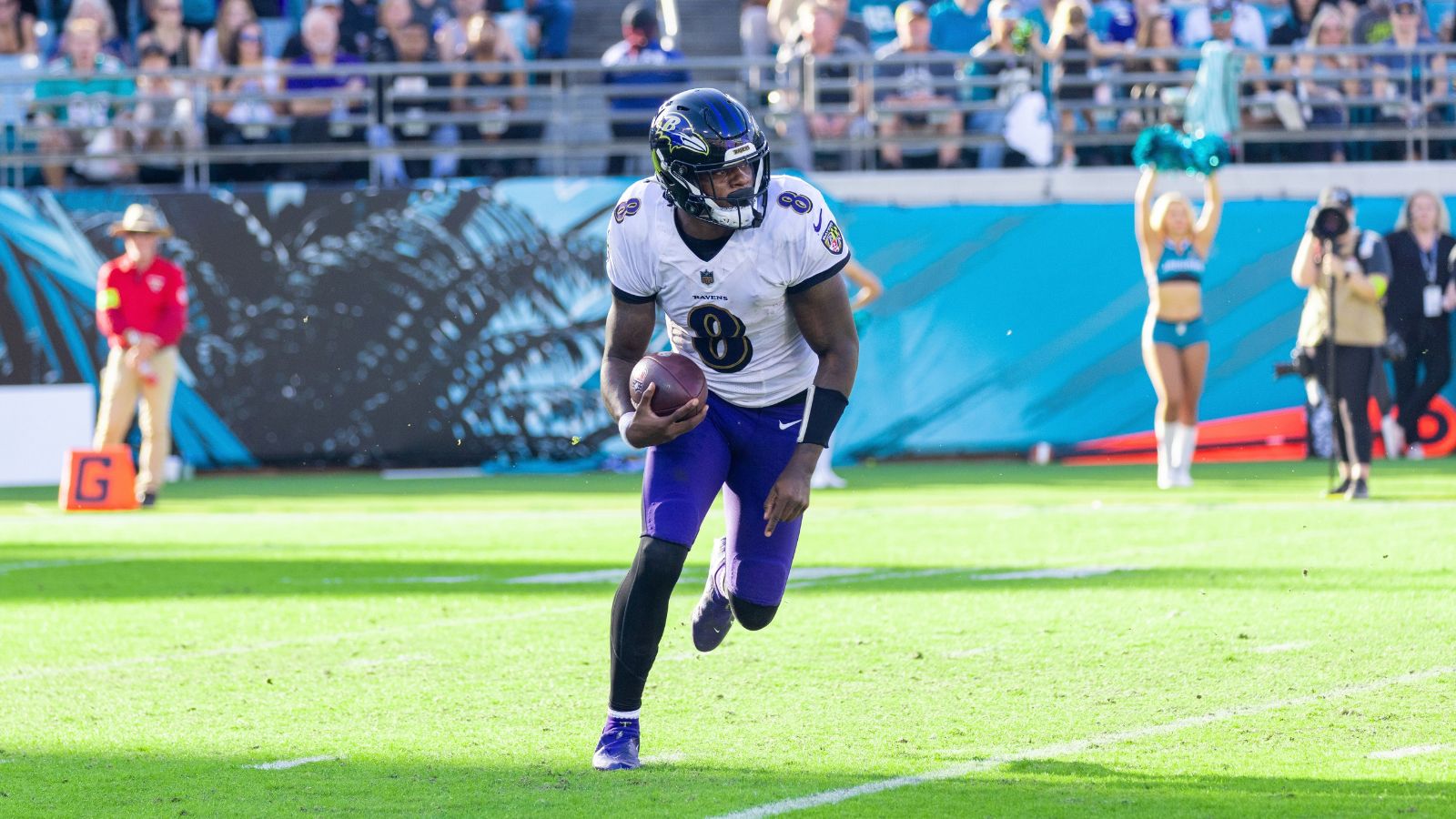
Lamar Jackson’s legs remain the first thing many defenses fear, but his Week 1 passing line against Indianapolis quietly stood out. Jackson completed 17 of 25 passes for 324 yards, averaging 13.0 yards per attempt. He threw one touchdown, avoided interceptions and finished with a 124.2 passer rating. He also ran seven times for 40 yards and another score as Baltimore put up 41 points on the road.
The unusual feature was how much yardage Jackson generated without heavy passing volume. Quarterbacks often need 35 or 40 attempts to clear 300 yards; Jackson reached 324 on only 25 throws. That level of efficiency punishes defenses for loading resources toward Baltimore’s running game. Derrick Henry’s 144 rushing yards already forced Indianapolis to respect the backfield, and Jackson’s downfield passing made that choice even harder. His rushing remains elite, but explosive efficiency through the air would make an already difficult Ravens offense considerably tougher to solve.
T.J. Watt — His Week 1 Stat Line Looked Like an Awards Reel
T.J. Watt did not merely open 2026 with a productive pass-rushing game. Against Atlanta, he recorded two sacks and four total tackles, intercepted a pass and returned it 35 yards for a touchdown. NFL’s Week 1 analysis also credited him with three tackles for loss. Pittsburgh won 20-13, so Watt’s interception return supplied seven points in a game decided by seven.
That matters because Watt has set such an extreme career baseline that strong seasons can almost feel routine. An edge defender creating pressure is expected; an edge defender also producing a defensive touchdown changes the game’s arithmetic. His opener showed that the impact still extends beyond sack totals. Watt affected field position, scoring and Atlanta’s protection plan at the same time. When one defender can create points directly while disrupting drives indirectly, even a box score packed with sacks and a pick-six can understate how heavily he influenced the result.
Roquan Smith — Baltimore’s Defensive Leader Filled Every Column
Roquan Smith’s Week 1 performance showed why linebacker value is often spread across several categories rather than captured by one headline statistic. Against Indianapolis, Smith recorded 11 tackles, defended two passes and made an interception in Baltimore’s 41-23 win. The return gained only one yard, but the takeaway ended a Colts possession and gave the Ravens another opportunity. His tackle total also showed how involved he remained in a game Baltimore controlled on the scoreboard.
The start looks meaningful after Smith played 15 games in 2025 and finished with 128 tackles, below the 144 and 148 he posted in the previous two seasons. One game cannot establish a trend, but the opener checked nearly every box: tackling, coverage disruption and a takeaway. Linebackers rarely receive the weekly attention given to quarterbacks, receivers or sack leaders unless they make a spectacular play. Smith’s value is quieter, and Week 1 showed how many different ways he can influence a defense.
C.J. Stroud — The Loss Made His Passing Performance Look Worse Than It Was
Houston’s 36-31 loss to Buffalo naturally pushed attention toward Josh Allen, but C.J. Stroud’s passing performance was cleaner than the final result suggests. Stroud completed 26 of 38 passes for 274 yards, two touchdowns and no interceptions, finishing with a 106.7 passer rating. He also added 15 rushing yards. Against Buffalo, Stroud repeatedly kept Houston moving without giving the defense an interception.
There was an important blemish: Stroud was charged with two fumbles and lost both, so this was not a mistake-free performance. Still, separating passing efficiency from total quarterback turnovers gives a more accurate picture of his day. He completed 68.4% of his throws and produced two touchdowns without an interception. Houston did not lose because Stroud was unable to generate offense. The opener instead showed a passing game capable of trading scores with Buffalo, even while ball security and late-game execution left obvious room for improvement. The result was disappointing; the throwing performance was more encouraging.
Jalen Hurts — Three Touchdown Passes Got Buried in a Two-Point Win
Philadelphia’s 24-22 victory over Washington was close enough to invite questions about the Eagles, but Jalen Hurts quietly produced an efficient passing line. He completed 14 of 25 passes for 203 yards, three touchdowns and no interceptions, averaging 8.1 yards per attempt and posting a 122.2 passer rating. He also rushed seven times for 46 yards, adding another source of stress for the defense.
The 56% completion rate keeps the line from looking pristine, yet the high-value outcomes were excellent. Hurts turned 14 completions into three touchdowns, avoided interceptions and created 249 combined passing and rushing yards. That is the type of performance that can be underrated when a team wins narrowly and its quarterback does not approach 300 passing yards. Philadelphia’s offense is often judged through its rushing identity and star skill players, but Week 1 was a reminder that Hurts can still tilt games through efficient explosive passing when the volume remains modest.
Fred Warner — His Return Already Looks Like More Than a Feel-Good Story
Fred Warner’s 2025 season lasted only six games, so simply returning to the middle of San Francisco’s defense carried significance. His Week 1 performance against the Rams showed something more substantial. Warner recorded 11 tackles, defended a pass and forced a fumble as the 49ers won 27-7 on the road. The stat line combined range, coverage impact and turnover creation, traits that have defined his best seasons.
Warner has never been just a tackle accumulator. His value comes from affecting the ball while helping San Francisco remain aggressive without becoming vulnerable in the middle of the field. His career history adds weight to the opener: before the shortened 2025 season, he had posted at least 107 tackles every year from 2018 through 2024. One game does not guarantee another full-volume season, but 11 tackles plus a forced fumble is a strong opening signal. The 49ers did not merely get Warner back on the field; they immediately got meaningful production from him.
Derwin James — A Losing Score Hid How Active He Was Everywhere
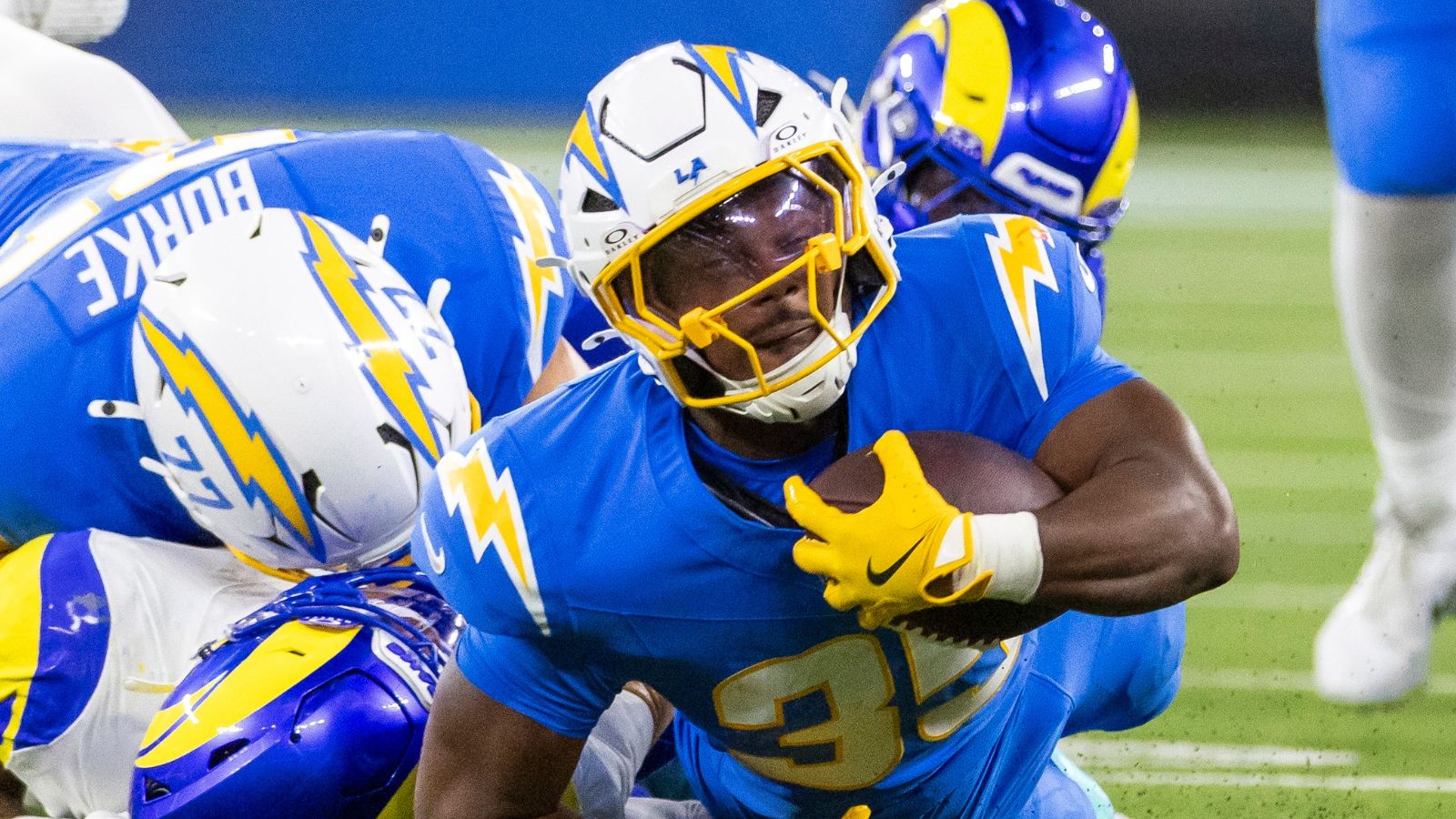
The Chargers lost 26-14 to Arizona in Week 1, and defensive performances often disappear from the conversation when the team spends most of the afternoon trailing. Derwin James nevertheless opened the season with 10 tackles, including seven solo stops, and added a pass defended. For a safety, reaching double-digit tackles in the opener reflects how frequently he was involved around the ball and asked to finish plays.
James’ value has always been tied to versatility, which can make his best games harder to summarize than a pass rusher’s two-sack afternoon. A safety can play well without recording an interception, and Week 1 offered that kind of performance. James did not produce a sack or takeaway, but he consistently finished tackles and contributed in coverage. The Chargers still allowed 26 points, so there is no reason to dress the outing up as a dominant team defensive effort. Individually, however, James looked active, physical and central to the unit’s work.
Maxx Crosby — The Sack Production Started Immediately
Maxx Crosby’s first game of 2026 did not produce a huge tackle total, which is exactly why the performance can slip past casual attention. He recorded 1.5 sacks in Las Vegas’ 27-13 win over Miami, immediately putting meaningful pressure production on the board. Crosby finished with only two total tackles, but sacks are among the highest-leverage plays a defensive end can make because they can wreck down-and-distance and end drives.
The opener also fits his longer track record rather than looking like a one-game anomaly. Crosby recorded 10 sacks in 15 games during 2025 and has 71 career sacks through 111 regular-season games. He has built that production through workload and relentless pressure rather than occasional specialist snaps. Starting 2026 with 1.5 sacks suggests the basic formula remains intact. Defensive stars outside the biggest weekly storylines can lose attention quickly, but Crosby’s first completed game was a reminder that one of football’s most consistent edge disruptors is already producing again.